Locked in the Basement: What's Really Keeping Broadcast Giants From Opening Their Vaults
Photo: NASA, Public domain, via Wikimedia Commons
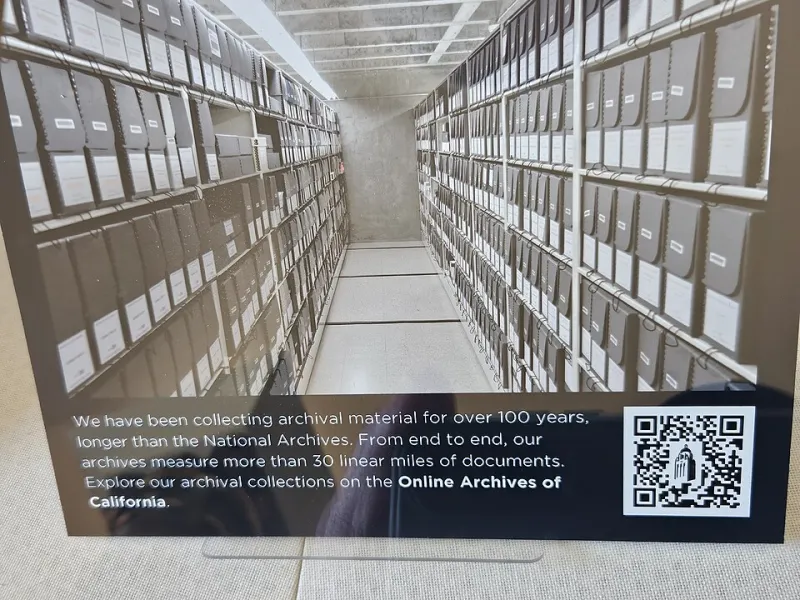
Somewhere in a climate-controlled facility outside of Burbank, there are shelves of broadcast content that almost nobody has seen in thirty years. Same story in New York, in Atlanta, in Chicago. The big networks — your NBCs, your CBSs, your ABCs — have been accumulating material since the earliest days of television and radio, and a remarkable amount of it has never been digitized, licensed for streaming, or made available to the public in any meaningful way.
You'd think that in the era of subscription streaming, where platforms are constantly hungry for content to justify their monthly fees, somebody would have figured out how to unlock all of this. You'd be wrong. And the reasons why are a lot more complicated — and honestly, a lot more frustrating — than most people realize.
The Rights Clearance Nightmare Nobody Talks About
Here's the thing about a TV episode from 1987 or a radio broadcast from 1994: it wasn't made by one person. It was made by dozens, sometimes hundreds. Writers, directors, actors, musicians, producers — all of them have some claim on the content, and all of those claims are governed by contracts that were written long before anyone imagined a world where you'd stream video on your phone.
Archivists who work with legacy broadcast collections will tell you that rights clearance is the single biggest bottleneck in the whole process. "You can have a show that everyone remembers fondly, a genuine piece of American television history, and you literally cannot release it because you can't track down who owns the music rights to the theme song," one archivist who works with a major network told us. "The original publisher sold to another company, which got absorbed by a conglomerate, which was then partially acquired by a private equity firm. Good luck finding the right person to sign a check."
That's not a hypothetical. It's a description of what actually happens, routinely, when studios try to move archive content toward release. The music licensing issue alone is so thorny that entire seasons of beloved shows — WKRP in Cincinnati is the classic example — had their original soundtracks replaced when they finally did get released, which caused a whole other set of problems.
And music is just the beginning. Actors' residual agreements, writers' guild provisions, the rights of estates for deceased contributors — every layer you peel back reveals another set of negotiations, another set of lawyers, another invoice.
Storage Is More Expensive Than You Think
Let's say a network decides it wants to digitize its entire archive — every episode, every special, every regional broadcast that got recorded and filed away. What does that actually cost?
The numbers get big fast. Physical media — film reels, videotape, early digital formats — degrades over time and requires specialized equipment to read. Digitization at broadcast quality is labor-intensive and technically demanding. Then there's the storage infrastructure for the resulting files, which can run into petabytes of data for a major network's full catalog.
"People assume that because hard drives are cheap, storage is cheap," says a digital preservation consultant who has worked with several major media companies. "But broadcast-quality archiving isn't consumer-grade stuff. You're talking about redundant systems, climate-controlled server environments, ongoing maintenance contracts. For a full network archive, you're looking at millions of dollars just to get the material into a stable digital state — before you've cleared a single rights issue or built a single piece of streaming infrastructure."
For content that might attract a niche audience at best, that's a hard business case to make. Networks are publicly traded companies or subsidiaries of massive conglomerates. Every expenditure has to justify itself against other priorities. A $20 million digitization project for content that might generate $2 million in streaming revenue over five years doesn't make it past the first budget meeting.
The Paradox of Uncertain Value
Here's where it gets genuinely strange. The same executives who won't greenlight an archive digitization project will readily admit that some of that content is probably worth a lot of money. They just don't know which parts.
There's no reliable way to predict which old shows will find new audiences on streaming platforms. Columbo became a genuine hit for a whole new generation on streaming. So did The Mary Tyler Moore Show. But for every one of those, there are dozens of titles that got released quietly and attracted almost no attention. The calculus is genuinely difficult.
"The frustrating part is that the content that's most likely to have cultural or historical value is often the least commercially attractive," says one media industry analyst. "Regional news broadcasts, local radio programs, public affairs content — that stuff is gold for researchers and historians, but it's not going to drive subscriber growth for a streaming platform."
This is where the gap between commercial value and cultural value becomes painfully visible. The market doesn't have a great mechanism for funding the preservation of things that matter without necessarily being profitable.
What Would It Actually Take?
Some people in the industry think the answer is public-private partnership — essentially, government or foundation funding to cover digitization costs in exchange for some form of public access, with commercial rights retained by the networks. The Library of Congress already does some version of this, and the American Archive of Public Broadcasting has made real progress with public radio and TV content.
But for commercial broadcast material, the model is murkier. There's no obvious funding source, no clear regulatory framework, and a lot of institutional reluctance from networks that are wary of setting precedents around their intellectual property.
Others think the streaming wars will eventually force the issue. As platforms exhaust the supply of obvious content and competition intensifies, deep archive material starts to look more attractive. Some of the major streamers have already started licensing catalog content that would have seemed too niche to bother with five years ago.
"The economics will shift," one industry insider predicts. "They always do. The question is whether the physical media survives long enough for the economics to catch up."
That last point is the one that keeps archivists up at night. Every year that passes without digitization is a year of additional degradation for physical media. Magnetic tape has a finite lifespan. Film stock deteriorates. The window for preserving some of this material isn't infinite, and the clock is running.
The Stuff That's Already Gone
It's worth being clear about something: a significant portion of broadcast history is already lost, and not because of legal complications or budget constraints. Early television was routinely recorded over because tape was expensive and nobody thought the content had lasting value. Entire runs of shows, years of news broadcasts, live performances that were never meant to be preserved — gone.
What's sitting in those Burbank vaults is the stuff that survived by accident or by the foresight of individual archivists who understood that today's broadcast is tomorrow's history. Losing it now, to legal gridlock or institutional indifference, would be a different kind of tragedy — one that's entirely preventable.
For anyone who believes that broadcast history is worth keeping, that's the real $500 million question. Not whether the content has commercial value, but whether we're willing to treat it as something worth saving regardless of what it's worth on a balance sheet.