Stacks and Signals: How Libraries and Universities Are Quietly Winning the Broadcast Preservation Game
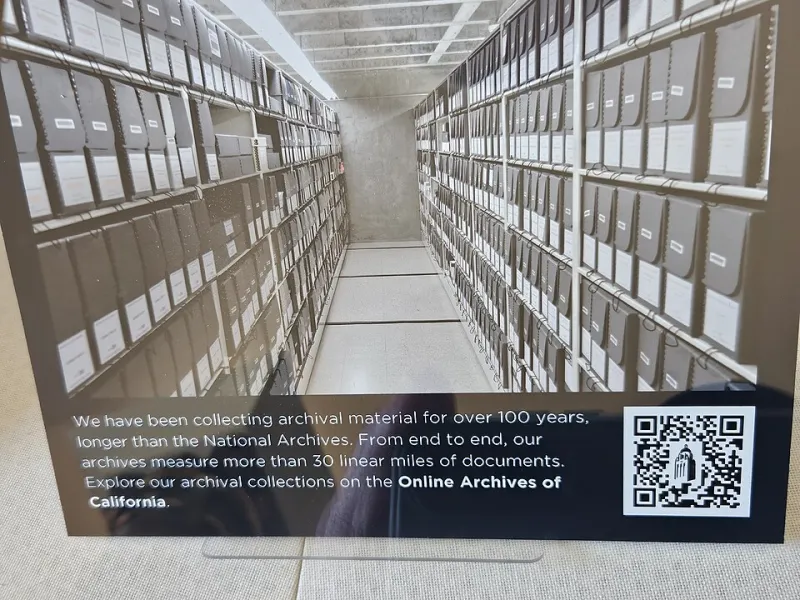
Photo: GualdimG, CC BY-SA 4.0, via Wikimedia Commons
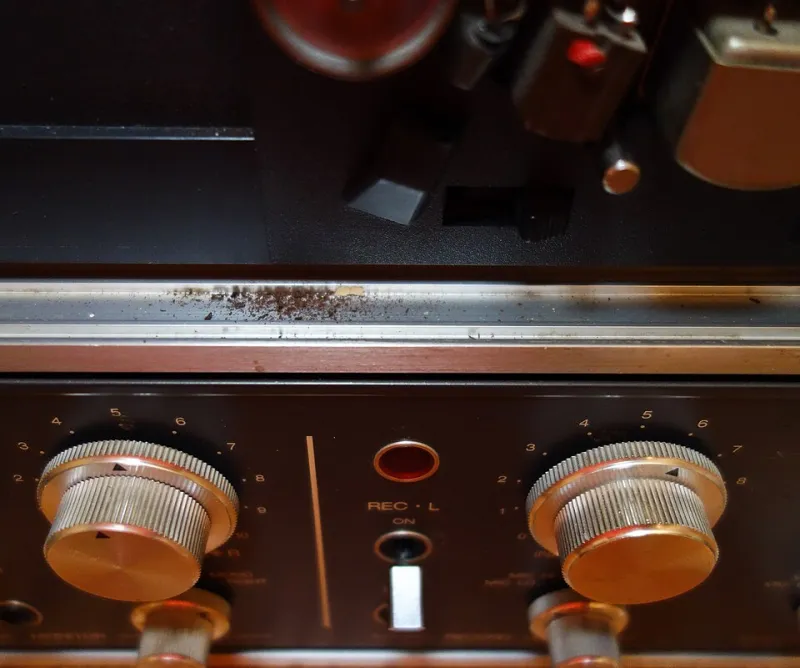
There's a room somewhere on a mid-sized university campus in the Midwest where a librarian is carefully cataloging a box of quarter-inch reel-to-reel tapes that once belonged to a regional AM station that signed off for the last time in 1987. Nobody outside that building knows those tapes exist. In five years, thanks to a digitization grant and a lot of patience, anyone with a library card might be able to stream them.
That's not a dramatic story. It doesn't involve a billionaire or a streaming war or a viral moment. But it might be one of the most important things happening in American broadcast culture right now.
The Institutions Nobody's Talking About
When people think about who's saving old radio and television content, they usually picture either a tech company with server farms or a hobbyist with a garage full of VHS tapes. The middle ground — public libraries, university media archives, and nonprofit preservation societies — rarely makes headlines. That's a shame, because these organizations are quietly assembling some of the most comprehensive and carefully maintained broadcast collections in the country.
The American Archive of Public Broadcasting, a collaboration between the Library of Congress and GBH in Boston, has digitized and made accessible well over 100,000 hours of public radio and television content. That's not a small number. That's decades of local news coverage, documentary programming, educational broadcasts, and cultural programming that would otherwise exist only on deteriorating magnetic tape in storage units nobody's checking on.
Similarly, institutions like the Paley Center for Media in New York and Los Angeles maintain curated broadcast collections spanning commercial television and radio going back to the earliest days of the medium. University programs at schools like UCLA, Syracuse, and the University of Maryland have built dedicated media preservation infrastructure that rivals — and in some cases exceeds — what commercial platforms have bothered to construct.
Why Institutions Do This Better
Here's the honest answer: institutional archives don't have shareholders. That sounds simple, but it changes everything about how preservation decisions get made.
A streaming service acquires a broadcast catalog because it sees subscriber value. The moment that calculation changes — because of a merger, a rights dispute, a shift in audience demographics — the content becomes a liability. We've seen this play out repeatedly. Entire libraries of content have been pulled from commercial platforms not because nobody wanted them, but because the business math stopped working.
Libraries and universities operate on a different logic. Their mission is preservation and access, full stop. A university media center isn't going to decide that a collection of 1970s public affairs radio programming is underperforming and quietly delete it. That content stays, gets cataloged, gets digitized when funding allows, and gets made available to researchers and the public according to whatever access rights the institution has negotiated.
The cataloging piece is also worth emphasizing. Commercial platforms are notoriously bad at metadata. Try searching for a specific episode of a show that aired thirty years ago on a major streaming service and see how far you get. Institutional archives, staffed by actual librarians and archivists, tend to treat cataloging as a core function rather than an afterthought. That makes the material genuinely discoverable in ways that even well-funded commercial collections often aren't.
The Copyright Maze
None of this is easy, and it would be dishonest to pretend otherwise. Copyright is the single biggest obstacle institutional archives face, and it's a genuinely complicated problem.
Broadcast content often involves layered rights — the underlying script, the music used, the performances captured, the format itself. Clearing all of those rights for public digital access can be a years-long process that sometimes ends with a collection that's accessible only on-site at the archive, or only to credentialed researchers, or only in ways that feel frustratingly limited for the average listener who just wants to hear what afternoon drive radio sounded like in Cleveland in 1974.
Some institutions have gotten creative. The Library of Congress has worked with rights holders on specific agreements that allow broader access than standard copyright would permit. University archives sometimes operate under educational use frameworks that open up access in ways commercial platforms can't claim. Nonprofit preservation societies have occasionally negotiated directly with estates and rights holders who are more interested in having their content preserved than in extracting licensing fees.
It's slow work. But it's happening.
Funding: The Unglamorous Reality
Grants are the lifeblood of institutional broadcast preservation, and grant cycles are brutal. An archive might spend two years building out digitization infrastructure on federal funding, then spend another year scrambling for the next grant to keep the project staffed. The National Endowment for the Humanities, the Institute of Museum and Library Services, and various state humanities councils all play a role in keeping these projects alive, but the funding landscape is never stable.
Some universities have found ways to build preservation work into their academic programs, training the next generation of archivists while getting actual preservation work done. That's a smart model, but it requires sustained institutional commitment from administrations that sometimes see media archives as a lower priority than, say, a new research center with more obvious external funding potential.
Public libraries face even steeper constraints. Branch libraries in smaller cities and rural areas often hold genuinely irreplaceable local broadcast material — recordings of city council meetings, local sports coverage, community radio programming — with almost no resources dedicated to preserving it. The gap between what exists and what's being actively maintained is significant.
What This Means for Listeners
If you care about having access to broadcast history — not just the hits, not just the content that still has commercial value, but the full weird sprawling record of what American radio and television actually sounded and looked like — institutional archives are your best long-term bet.
That doesn't mean commercial platforms aren't useful. They are. But they're useful for different things. A streaming service is great for watching something tonight. An institutional archive is great for ensuring that something still exists in twenty years.
The practical upshot: if you're a listener who wants to engage with broadcast history, it's worth knowing that your public library system may have more to offer than you think. Many institutional collections have developed online access portals that don't require you to physically visit an archive. The American Archive of Public Broadcasting, for instance, makes a substantial portion of its collection streamable directly through its website at no cost.
The Quiet Bet Worth Making
There's something genuinely reassuring about the fact that the most committed stewards of broadcast history are often institutions whose entire purpose is to hold things in trust for future generations. They're not flashy. They don't have marketing budgets. Their interfaces are sometimes clunky and their funding is always uncertain.
But when a commercial platform decides to pull a catalog because the licensing math changed, the content those institutions have already digitized and cataloged doesn't disappear with it. That's not a small thing. In a media landscape where everything feels temporary, the stacks endure.