Contraband That Counts: Why Illegal Tapes Are Now Legitimate History
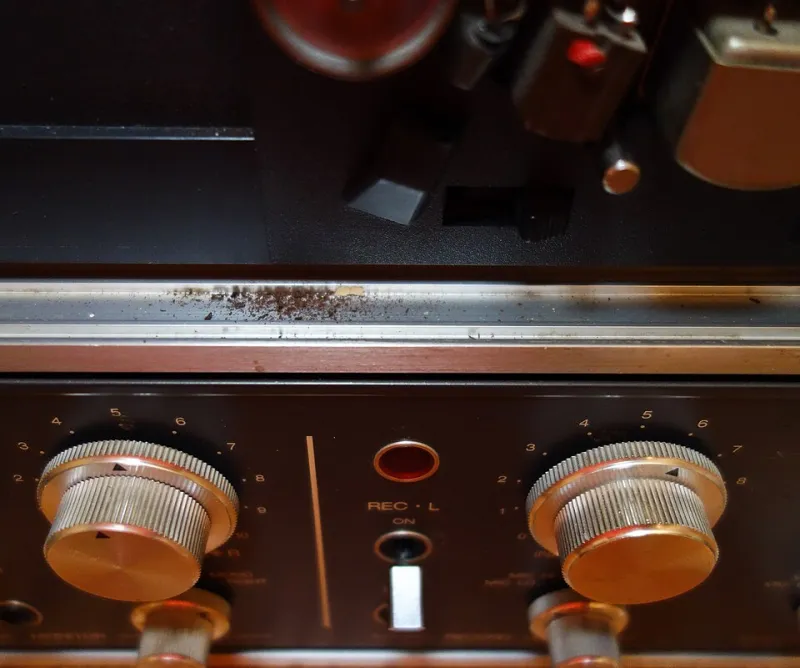
Photo: Danielteolijr, CC BY-SA 4.0, via Wikimedia Commons
There's a VHS tape sitting in a climate-controlled storage unit in suburban New Jersey. The label, written in faded Sharpie, reads something like NBC Sat Nov 22 1986 — DO NOT ERASE. The person who recorded it wasn't a professional archivist. They weren't working on behalf of any institution. They just had a feeling that what they were watching mattered, and they hit record.
Decades later, that tape — and thousands like it — might be the only surviving copy of a broadcast moment that no network bothered to keep.
Welcome to the bootleg renaissance.
The Networks Threw It Away. Fans Didn't.
It sounds almost unbelievable now, but for most of broadcast television's golden era, the major networks had a deeply casual relationship with their own output. Tape was expensive. Storage was expensive. The assumption was that a show aired, people watched it, and that was that. Nobody was going to need to watch The Tonight Show from 1971 again.
So they erased it. They taped over it. They literally threw the reels in dumpsters.
Meanwhile, ordinary Americans were doing something the networks weren't: they were saving things. First on reel-to-reel audio recorders, then on Betamax and VHS decks, fans were capturing off-air broadcasts in real time. Concert specials. Award shows. News coverage of national crises. Regional programming that never made it past the local affiliate. Saturday morning cartoons that somehow never got a home video release.
The quality wasn't always great. You can still hear the hiss of magnetic tape on a lot of these recordings, the occasional audio dropout, the channel ID jingle bleeding in at the wrong moment. But the content? The content is irreplaceable.
When 'Illegal' Becomes 'Essential'
Here's where things get complicated in a way that's genuinely fascinating. Most of these recordings were, technically speaking, made without authorization. Copyright law in the United States has always been a little fuzzy about home recording — the 1984 Sony Corp. v. Universal City Studios decision (better known as the Betamax case) established that time-shifting for personal use was fair use, but distributing those recordings is a different matter entirely.
And yet.
When the Paley Center for Media wants to document a specific broadcast moment, they sometimes end up on the phone with a guy in Ohio who has been quietly maintaining a collection of off-air dubs since 1979. When a documentary filmmaker needs footage of a live television event that no network can produce from their own vaults, they start reaching out to collector communities on forums that have been operating just under the radar for years.
The legal status of these recordings hasn't changed. But the cultural and historical weight attached to them absolutely has.
Archivists have started using the phrase "primary source" to describe bootleg recordings in contexts where that term would have seemed absurd twenty years ago. If a tape is the only surviving record of a broadcast, the provenance conversation becomes secondary to the preservation conversation — fast.
The Collector Underground Goes Mainstream
For a long time, serious broadcast collectors operated in a kind of informal underground. Tape trading networks existed through mail-order lists, early internet newsgroups, and eventually private forums. These weren't people who thought of themselves as doing anything particularly significant. They were enthusiasts. Hobbyists. Obsessives, in the most affectionate sense of the word.
But something shifted as streaming platforms rose to dominance and simultaneously began demonstrating just how fragile digital availability really is. Shows got pulled. Licensing disputes made entire catalogs disappear overnight. Suddenly, the collector community wasn't just a quirky subculture — it was a backstop.
Major institutions started paying closer attention. The Library of Congress has been quietly expanding its relationships with private collectors for years, and while the specifics of individual arrangements are rarely publicized, the pattern is clear: formal archives are supplementing their holdings with material sourced from people who technically weren't supposed to have it in the first place.
Some universities with strong media studies programs have gone even further, creating formal donation pipelines for collector materials — with legal frameworks designed to protect both the institution and the individual handing over the tapes.
Concert Recordings and the Music Angle
If broadcast television has its bootleg history, music has an entire parallel universe of it. Unauthorized live concert recordings — captured on handheld recorders hidden in jacket pockets, or through direct soundboard feeds traded among dedicated tapers — represent one of the most extensive unofficial archives in American cultural history.
The Grateful Dead famously embraced their taper community, designating specific sections at shows where recording was permitted. That decision, which seemed eccentric at the time, created an astonishing documentary record of thousands of performances across decades. Other artists have come around to a similar appreciation, particularly as they've discovered that official releases don't always capture what their most devoted fans actually want.
For broadcast purposes — radio performances, televised concert specials, in-studio sessions — the same dynamic applies. A 1983 radio broadcast of a band at their commercial peak, preserved only because someone wired a cassette deck to their stereo receiver, becomes genuinely priceless when the official masters are lost or unavailable.
The Quiet Legitimization Nobody's Announcing
What's striking about this whole shift is how quietly it's happening. Nobody is holding press conferences to announce that bootleg tapes are now considered legitimate historical documents. The legal gray areas haven't been resolved — they've just been, in many cases, pragmatically ignored in favor of getting the work done.
Media historians talk about this in fairly candid terms when they're not speaking on the record. The reality is that for significant chunks of American broadcast history, the unofficial record is the only record. You can spend your time worrying about the copyright status of a 1974 off-air recording, or you can spend it actually preserving and studying the content. There's a growing consensus, at least among working archivists, about which of those is more useful.
For the collectors themselves, the rehabilitation of their hobby has been a strange kind of vindication. People who spent years being told they were hoarders, or worse — that what they were doing was legally questionable and culturally marginal — are now being consulted as experts. Their storage units and basement shelves, filled with carefully labeled tapes and meticulously maintained logs, have become research destinations.
What This Means for the Archive Going Forward
The lesson here isn't really about bootlegs. It's about what happens when official institutions fail to take their own output seriously.
The broadcast networks of the mid-twentieth century didn't value their archives because they didn't think archives mattered. The fans who preserved that material did so out of love, obsession, and an intuitive sense that someone should be keeping this. They were right, and the institutions were wrong, and now everyone is quietly adjusting to that reality.
For anyone thinking about what media preservation looks like in the streaming era — where content can vanish from platforms without notice and where physical media ownership is increasingly rare — the bootleg renaissance offers a pointed reminder. The things worth keeping don't always get kept by the people who made them.
Sometimes the most important archive is the one some dedicated fan built in their spare bedroom, one carefully labeled tape at a time.