3 AM and Fully Tuned In: The Insomniac Listeners Who Turned Late-Night Radio Into a Living Archive
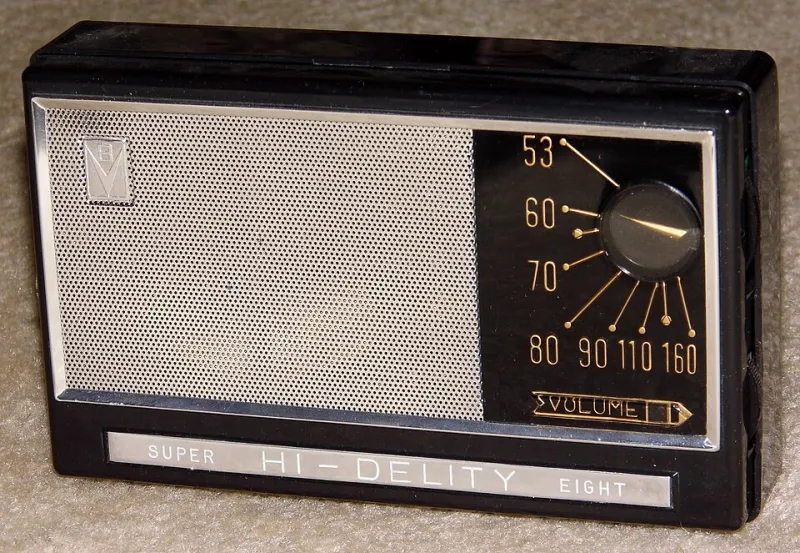
Photo: Joe Haupt from USA, CC BY-SA 2.0, via Wikimedia Commons
There's a specific kind of loneliness that comes with being awake at 3 AM when the rest of your neighborhood is dark and quiet. For millions of Americans across several decades, the answer to that loneliness wasn't scrolling a phone or queuing up a streaming service — it was a radio dial. Turned low enough not to wake anyone else. Tuned to something that felt like it existed just for them.
That feeling wasn't accidental. Late-night radio was designed for it.
The Hours Nobody Else Wanted
Broadcast programmers used to treat the overnight shift like a graveyard — something to fill, not cultivate. Syndicated talk formats, coast-to-coast call-in shows, and paranormal programs ended up in those slots partly because they were cheap to produce and partly because nobody expected big ratings after midnight. What nobody anticipated was the intensity of the audience that would show up anyway.
Shows like Coast to Coast AM — which launched as The Birach Broadcasting experiment before Art Bell turned it into a national institution — weren't just pulling insomniacs. They were pulling truck drivers grinding through Nevada on I-80, overnight shift nurses on break in hospital break rooms, college students pulling all-nighters in Midwestern dorms, and veterans who'd never quite gotten their sleep schedules back to normal. These weren't passive listeners. They were people who had nowhere else to go and nothing competing for their attention. They listened in a way that daytime audiences almost never did.
That depth of engagement created something unusual: loyalty that bordered on devotion.
Tape Decks and Trade Networks
Here's the part that connects directly to where we are now. Those devoted overnight listeners didn't just tune in — a significant number of them recorded what they heard. We're talking about a pre-internet, pre-podcast, pre-everything infrastructure of people setting their cassette decks to record before they fell asleep, or staying up specifically to capture a particularly compelling episode.
What happened next was essentially a grassroots archive network. Tapes got dubbed and mailed. Specific episodes — a particularly wild call-in segment, a guest interview that felt genuinely dangerous, a night when the host went completely off-script — circulated through informal networks of listeners who'd found each other through listener mail addresses, classified ads in niche publications, and eventually early internet bulletin boards.
This is the foundation of what we now recognize as audio fandom. The mechanics look different today, but the impulse is identical: I heard something that mattered, and I need other people to have access to it.
Those physical tape collections, many of which still exist in basements and storage units across the country, represent some of the only surviving documentation of broadcasts that were never officially preserved. The radio stations didn't keep them. The syndicators didn't keep them. The listeners did.
Why the Dark Made It Stick
There's actual psychology behind why late-night audio content creates stronger listener bonds than daytime programming. Reduced stimulation, lower cognitive guard, and the semi-hypnagogic state that comes with late-night listening all contribute to heightened emotional receptivity. In plain terms: you remember more, feel more, and connect more deeply with what you hear at 2 AM than what you hear at 2 PM.
Hosts who understood this — and the best late-night radio personalities absolutely understood it — adjusted their approach accordingly. The pacing slowed. The conversations went longer and stranger. There was space for tangents, for silence, for the kind of genuine uncertainty that gets edited out of polished daytime programming. Listeners weren't just consuming content. They were participating in something that felt collaborative and intimate in a way that mass-market broadcasting rarely achieves.
That's not nostalgia talking. It's a format principle that podcast producers have been quietly reverse-engineering for years.
The Throughline to Your Podcast Queue
Look at the podcasts that dominate consumption during late-night hours — and the data consistently shows that a significant chunk of podcast listening happens between 10 PM and 2 AM — and you'll notice something. The formats that perform best aren't the tightly produced, news-summary-in-fifteen-minutes shows. They're the long-form conversation podcasts, the paranormal and true crime deep dives, the rambling interview formats where the host and guest seem to genuinely forget anyone is listening.
That's late-night radio's DNA expressing itself through a new medium. The audience that built devotion around overnight AM broadcasts didn't disappear. They aged into the demographic that adopted podcasting early and enthusiastically, and they brought their listening habits with them.
Some of them brought their archives, too. Communities built around digitizing and sharing old radio recordings — particularly overnight and weekend programming from the 1980s and 1990s — have been quietly active on various platforms for years. The same energy that drove someone to mail a dubbed cassette to a stranger in 1991 now drives the meticulous upload of a 4-hour Art Bell episode to an archive repository, complete with timestamps and show notes.
What Gets Lost When Nobody's Awake to Record It
The uncomfortable flip side of this story is how much didn't get saved. For every devoted listener who hit record, there were hundreds of broadcasts that went out into the dark and simply evaporated. Stations that ran syndicated overnight content on automation didn't always log what aired. Hosts who did genuinely groundbreaking work in those forgotten hours — local overnight personalities, regional talk hosts, the DJs who played records that never got daytime rotation — exist now only in the memories of the people who happened to be awake.
This is part of why the late-night radio preservation community feels such urgency. The listeners who were adults during peak overnight radio culture are in their 50s, 60s, and 70s now. The tapes they kept are deteriorating. The memories are still sharp, but they won't be indefinitely.
The archive, in other words, has a closing time.
The Community That Never Really Went to Sleep
What's genuinely remarkable about the late-night listener community — both its historical version and its current podcast-era descendants — is how self-sustaining it proved to be. These weren't audiences that needed a network to organize them. They found each other in the margins, built their own infrastructure, and preserved content that nobody in a position of institutional power thought was worth saving.
That instinct is alive and well in 2024. It shows up in podcast Discord servers that run active at 1 AM. It shows up in Reddit communities dedicated to tracking down specific episodes of shows that never made it to streaming. It shows up every time someone digitizes an old tape and posts it somewhere accessible because they can't stand the idea of it disappearing.
The midnight shift never really ended. It just moved platforms. And the people who were always most comfortable in those late, quiet hours? They're still out there, still listening, still making sure the good stuff doesn't get lost.