Sign-Off: The Race to Preserve Independent Radio Before It Disappears for Good
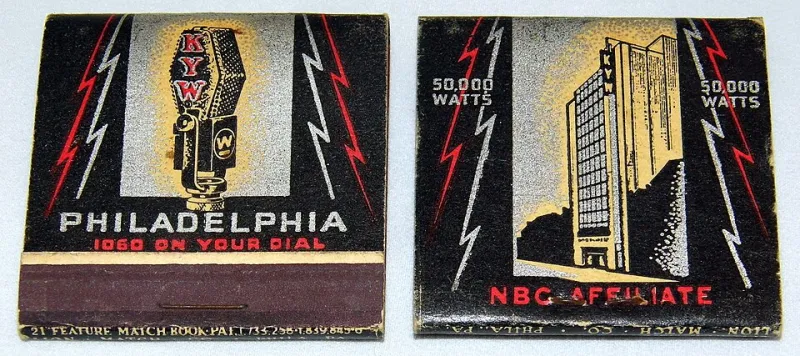
Photo: Joe Haupt from USA, Public domain, via Wikimedia Commons
There's a specific kind of silence that follows a radio station's final broadcast. It's not the silence of a song ending or a host taking a breath. It's the silence of a frequency that used to mean something to a community — a morning voice, a late-night blues program, a call-in show where people actually called in — going permanently, irrevocably quiet.
That silence is happening more often. And most of the time, nobody's recording it.
The Slow Disappearance Nobody's Talking About
Independent and community radio has been contracting for years, squeezed by consolidation, streaming competition, and the economics of local advertising. The Telecommunications Act of 1996 opened the door to large corporations owning dozens of stations in a single market, and the homogenization that followed is well-documented. What gets discussed less often is the quieter, ongoing loss of the genuinely independent operations — the community stations, the college broadcasters, the low-power FM outlets — that never had the resources to fight back and often close without so much as a press release.
When a major network affiliate goes dark, there's at least some institutional memory. Archives exist. Someone files the paperwork. But when a volunteer-run community station in rural Kentucky or a low-power jazz station in a midsize Texas city shuts down, the recordings, the playlists, the airchecks, the jingle packages — all of it can simply vanish. Hard drives get wiped. Tapes get tossed. The building gets repurposed and nobody thinks to ask what was stored in the back room.
"We lost everything from our first eight years," says one station manager at a community FM outlet in the Pacific Northwest who asked to remain anonymous while discussing internal decisions. "When we moved buildings, someone made a call that the old recordings weren't worth the storage cost. I still think about that."
Why These Recordings Are Culturally Irreplaceable
It's tempting to dismiss local radio archives as small-stakes nostalgia. It's a mistake.
Community radio, at its best, documents the life of a place in ways that nothing else quite replicates. Local music that never got a record deal. Interviews with civic figures before they were famous — or after they were forgotten. Call-in segments where ordinary people talked about housing costs, racial tension, school closings, and local elections with a candor that polished broadcast journalism rarely captures. Agricultural reports. High school sports. Obituaries read aloud by people who actually knew the deceased.
For historians, this material is primary source gold. For documentary makers, it's the texture that separates a real story from a reconstructed one. For communities themselves, it's proof that their concerns were spoken out loud, that their culture existed and was heard.
Kate Donahue, an audio preservationist who has worked with several Midwest community stations, puts it plainly: "When a station closes and the archive disappears, it's like a library burning down. Except nobody builds a monument to it."
The People Trying to Stop the Clock
Across the country, a loose network of archivists, audio engineers, and passionate volunteers is working to capture what they can before the lights go out.
The Association for Recorded Sound Collections (ARSC) maintains resources and connections for people trying to preserve audio material, and their membership includes individuals doing informal preservation work at the community level. The Internet Archive's audio collection has become a kind of catch-all repository for material that doesn't fit neatly into institutional archives — and station managers who know it exists have used it to upload years of programming before closing.
Some stations are being more intentional about their own legacies. WFMU in New Jersey, one of the most beloved freeform radio stations in the country, has maintained an extensive online archive for years and treats its recorded history as part of its ongoing identity. It's a model that smaller stations can learn from, even if they can't replicate it at the same scale.
But institutional models require resources that community stations frequently don't have. Which is where listeners come in.
You Can Be an Accidental Archivist
This is the part that doesn't get said enough: regular listeners have the tools to preserve local radio, and many of them are already doing it without thinking of it in those terms.
If you've ever recorded a favorite radio program on your phone, saved a streaming broadcast, or downloaded a podcast episode to listen offline, you've done a version of archival work. The gap between that casual behavior and meaningful preservation is smaller than you might think.
Here are practical steps anyone can take:
Record live broadcasts while you still can. Software like Audacity (free) or hardware like a simple digital recorder connected to a radio tuner can capture live FM broadcasts in decent quality. If a station you love is struggling financially or has announced it's shutting down, start recording now. Focus on programs that feel unique to that station — the stuff you can't find anywhere else.
Reach out to the station directly. Many community and independent stations have archives they don't know what to do with. A polite email asking whether they've considered uploading historical content to the Internet Archive can genuinely open a door. Some stations will welcome the help; others may not know the option exists.
Upload to the Internet Archive. Archive.org accepts audio uploads from individuals and has specific collections dedicated to radio broadcasts and live music. If you have recordings — even informal ones — this is a legitimate way to make them permanently accessible. The platform is free to use and built for exactly this kind of preservation.
Document the context, not just the content. A recording without context is harder to use. When you save a broadcast, note the station, the date, the time, the program name, and anything you know about the host or format. Future researchers will thank you.
Connect with local historical societies. If you have significant recordings — years of a particular program, rare airchecks from a station's early days — reach out to your regional historical society or a nearby university library. They may be interested in housing the collection properly.
The Broadcast as a Cultural Document
There's a philosophical argument underneath all of this that's worth naming directly. We tend to think of radio as ephemeral by nature — it's a live medium, it exists in the moment, and then it's gone. That impermanence was always part of the appeal.
But we've learned, over decades of losing things we didn't know we'd miss, that ephemeral doesn't have to mean erased. A broadcast can be both a live experience and a permanent record. The tension between those two things is exactly what makes audio preservation feel urgent right now.
Every independent station that goes dark without an archive takes a piece of community memory with it. The good news is that the tools to prevent that loss are genuinely accessible, and the window to act — while those stations are still on the air, while the managers who remember the early days are still reachable — is open right now.
The question is whether enough people care to use it before the frequency goes quiet.