From Shortwave to Spotify: How Podcast Storytellers Are Resurrecting Radio's Greatest Era
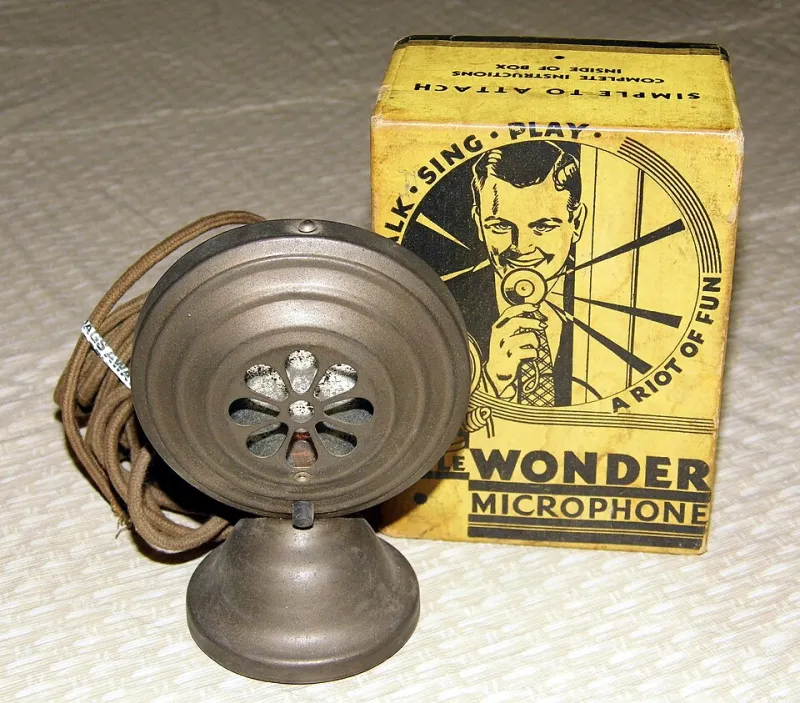
Photo: Joe Haupt from USA, CC BY-SA 2.0, via Wikimedia Commons
There's a particular kind of magic that happens when a story is told entirely through sound. No visuals to lean on. No scrolling feed to distract you. Just a voice, maybe some ambient audio, and your imagination doing the heavy lifting. For about four decades — roughly the 1930s through the early 1960s — that magic was the backbone of American broadcast culture. Radio documentaries weren't just popular; they were cinema for your ears, and audiences treated them with the same reverence we now give prestige TV.
Then television happened, and the art form quietly faded into the background. But here's the thing: it never really died. It just went dormant. And right now, in the middle of what a lot of people are calling a podcast golden age, that dormant tradition is waking back up in a big way.
What Made Classic Radio Documentaries So Different
If you've never sat down with an archival broadcast from, say, Edward R. Murrow's Hear It Now or CBS's You Are There, it's worth carving out some time in the On Air Library collection to do exactly that. What strikes most modern listeners immediately is the patience of those programs. They weren't rushing anywhere. A story about a coal mining community in Pennsylvania might unfold over forty-five minutes with field recordings, multiple interview subjects, and a narrator who trusted the audience to follow along without hand-holding.
That approach demanded something from listeners that most modern media doesn't: active attention. You couldn't zone out. You had to listen, in the fullest sense of the word. Producers of that era understood that audio storytelling, done right, creates a kind of intimacy that no other medium can match — because the pictures are built inside the listener's own head.
The investigative depth was also something else entirely. Radio documentarians of the mid-century weren't just covering events; they were contextualizing them, challenging them, sometimes openly confronting power in ways that felt genuinely dangerous. Murrow's famous takedown of McCarthyism didn't happen on television first — it lived in audio journalism long before the cameras arrived.
The Podcasters Picking Up the Thread
Fast-forward to today, and you'll find a surprisingly robust community of podcast creators who are consciously drawing from that well. Shows like Serial, which more or less launched the modern true-crime podcast era back in 2014, didn't emerge from nowhere — host Sarah Koenig and her team at This American Life were steeped in the traditions of long-form radio journalism. The serialized structure, the willingness to sit with ambiguity, the layered audio design — all of it echoes what the best mid-century radio documentarians were doing.
But the revival goes deeper than true crime. Radiolab has spent two decades building a style of science journalism that's genuinely cinematic, using sound design the way a film editor uses cuts. 99% Invisible turns architectural and design history into something that sounds like a thriller. And shows like Bundyville or Your Own Backyard carry the investigative DNA of classic broadcast journalism into genuinely new territory.
What's interesting is how many of today's podcast producers are explicitly citing those broadcast ancestors as influences. The through-line isn't accidental — it's intentional.
Why Audiences Are Ready for This Again
Here's a theory worth sitting with: people are exhausted by passive media consumption. After years of autoplay queues, algorithmic content feeds, and shows designed to be watched while you're doing something else, there's a growing hunger for content that actually asks something of you. Audio storytelling — the real kind, the kind with layers and patience and craft — fills that need in a way that nothing else quite does.
Commute culture plays into it too. Americans spend an average of about 27 minutes each way getting to work, and a significant chunk of that time now belongs to podcasts. That's almost exactly the runtime of a classic radio documentary episode. The format fits the lifestyle in a way that feels almost engineered — even though it was engineered eighty years ago for a completely different world.
There's also something to be said for the archival dimension. At On Air Library, we think a lot about the relationship between live broadcast and preserved content, and one of the things that makes this podcast revival so exciting is that it's archivable in a way that early radio never was. Those mid-century documentaries survived only if someone had the foresight to record and store them — and plenty didn't. Today's podcast renaissance is being documented in real time, building a living archive of audio storytelling that future listeners will be able to stream decades from now.
The Craft Gap — And Who's Closing It
Not every podcast that calls itself a documentary actually earns the label. There's a real difference between a host reading Wikipedia summaries over a lo-fi music bed and the kind of deeply reported, carefully sound-designed audio journalism that honors the tradition we're talking about. The gap between the two is enormous, and savvy listeners can feel it immediately.
The shows closing that gap tend to share a few characteristics. They invest in field recording. They take interview subjects seriously enough to let them speak at length rather than cutting everything to a ten-second clip. They use music and ambient sound as storytelling tools rather than wallpaper. And crucially, they're willing to take their time — to let a story breathe across multiple episodes rather than cramming everything into a single bingeable drop.
Producers at places like Pineapple Street Studios, Gimlet (before and after its Spotify acquisition), and independent outfits like Radiotopia are doing some of the most interesting work in this space. They're not just making podcasts. They're making broadcasts — in the fullest, most historically grounded sense of that word.
Streaming the Past, Archiving the Future
One of the most exciting developments in this space is the growing availability of archival radio content alongside contemporary podcasts. Platforms that take audio heritage seriously are giving listeners the ability to move fluidly between a 1947 broadcast and a 2024 podcast episode, hearing the direct line of influence for themselves. That kind of contextual listening changes the experience entirely — suddenly, today's podcast isn't just a show, it's a chapter in a much longer story.
That's the vision that gets us excited here at On Air Library. Audio storytelling has a history worth knowing, and the best way to understand where the medium is going is to spend time with where it's been. Stream the broadcast. Own the archive. The golden age of radio documentaries isn't just a historical footnote — it's the foundation everything being built right now is standing on.