When the Streamers Won't Go There: Inside the Fan Archives Saving Broadcast History
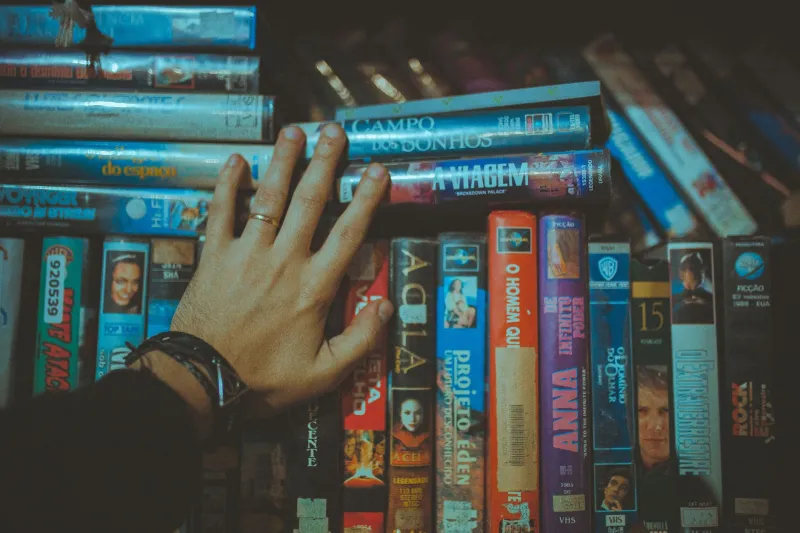
Somewhere in a climate-controlled spare bedroom in suburban Ohio, a guy named Marcus has roughly 14,000 hours of television nobody is ever going to stream. Late-night talk show appearances from acts that never broke nationally. Regional sports broadcasts from teams that folded decades ago. Public access programming from cities that no longer look anything like they did on tape. He's been collecting since the mid-90s, and he has no plans to stop.
"The stuff I have," he says, "Netflix doesn't want it. Peacock doesn't want it. Nobody wants it except the people who lived through it — and me."
Marcus is part of a sprawling, largely invisible community of collectors, archivists, and what some call "tape hunters" who have built their own shadow libraries of broadcast content. These aren't pirates in the Hollywood blockbuster sense. Most of them aren't trying to profit. They're filling a gap that the streaming economy, for all its ambition, has left wide open.
The Profitability Problem
Here's the uncomfortable math that drives all of this: streaming platforms make licensing decisions based on projected audience size. If a piece of content can't pull enough eyeballs to justify the cost of clearing rights, digitizing footage, and maintaining it in a catalog, it simply doesn't get acquired. That sounds reasonable until you realize how much falls through that filter.
Think about how many regional sports networks have folded in the last decade. The broadcast archives from those outlets — thousands of hours of games, pre-game shows, player interviews — often end up in legal limbo when the parent company collapses or gets absorbed into a larger entity. Rights holders become unclear. Footage sits in storage. Nobody streams it because nobody technically owns the streaming rights in any clean, actionable way.
Or consider the late-night talk show circuit from the 1980s and 90s. The big names — Carson, Letterman, Leno — have found comfortable homes in various archive deals. But the second and third-tier shows? The regional syndicated programs? The one-off specials where an indie band played their only televised set? That material exists in a kind of broadcast purgatory.
"Corporate libraries are curated around what's marketable," says Diana, a media studies researcher who consults informally with several fan archive communities. "What gets preserved in any accessible way is whatever someone thinks they can sell. Everything else is just... not a priority."
The Gray Area These Collectors Live In
None of this is strictly legal, and the people involved know it. Fan archivists occupy a murky space where copyright law, fair use doctrine, and the practical reality of orphaned content all collide. Most operate under an informal code: don't sell, don't commercialize, share within trusted networks, and keep a low profile.
The legal exposure is real. A cease-and-desist from a major media company isn't hypothetical — it's happened to multiple high-profile archive communities over the years. Some of the most comprehensive fan libraries on the internet have been shut down without warning, years of painstaking curation wiped out in an afternoon.
What keeps people going, collectors say, is the conviction that they're doing something the industry has abdicated responsibility for. "If I don't save this, who does?" is a phrase that comes up constantly in these communities. It's not bravado. It's a genuine question with a genuinely uncomfortable answer.
Terry, who runs a private archive focused on obscure regional wrestling broadcasts from the Southeast, puts it bluntly: "I've reached out to the rights holders. I've asked if there's a legitimate way to preserve this stuff. You know what I hear back? Nothing. Silence. So what am I supposed to do, just let it disappear?"
What Gets Saved — and What Doesn't
The fan archive ecosystem is not evenly distributed. Content that already has a passionate niche following tends to get preserved. Cult TV shows, regional sports, underground music performances, public access oddities — these attract the kinds of devoted obsessives who will spend weekends digitizing VHS tapes for no compensation whatsoever.
But plenty of culturally significant broadcast material still slips through. Local news archives, especially from smaller markets, are notoriously difficult to find even within collector communities. Educational programming from the pre-cable era. Radio broadcasts, which are particularly vulnerable because the audio-only format often gets treated as less valuable than video.
Diana points out that what survives in fan archives tends to reflect who's doing the archiving. "These communities skew in particular directions — certain genres, certain demographics, certain regions. That's not a criticism, it's just reality. The gaps in corporate streaming libraries and the gaps in fan archives don't always overlap neatly."
The Legitimacy Question
There's an ongoing tension in these communities about whether to push for legitimacy or stay underground. Some archivists have attempted to work with universities, libraries, and historical societies to get their collections into more official hands. A few of those efforts have actually worked — collections donated to academic institutions, digitization projects quietly supported by people who technically shouldn't have the source material.
Others are deeply skeptical of formalization. The moment you try to go legitimate, the argument goes, you expose yourself to the legal machinery that's been ignoring you precisely because you weren't visible enough to bother with.
What's clear is that these collectors have developed a genuine expertise that the professional archival world often lacks. They know which formats are degrading fastest. They know which content is truly one-of-a-kind versus what exists in multiple copies. They've built informal authentication systems to verify that what they have is what they think it is.
"These people are archivists," Diana says. "They just don't have the credentials or the institutional backing. But in terms of practical knowledge about preserving this specific kind of content? Some of them know more than the people getting paid to do it."
What This Tells Us About Streaming's Limits
For anyone who thinks of streaming as a kind of ultimate library — the everything store of broadcast media — the fan archive world is a useful corrective. The platforms we rely on are not neutral preservation engines. They're businesses making calculated bets on what's worth keeping accessible.
That's not a scandal, exactly. It's just how markets work. But it does mean that huge swaths of American broadcast history exist in a state of genuine precarity, dependent on the dedication of hobbyists operating outside any formal system of support or protection.
At On Air Library, we talk a lot about owning your archive — about the value of having access to media on your own terms rather than at the mercy of a platform's licensing agreements. The fan archive community takes that idea to its logical, if legally complicated, extreme. They've decided that if nobody else is going to own this history, they will.
Marcus, back in his Ohio spare bedroom, is currently working through a batch of tapes from a regional talk show that ran for about four years in the early 1990s before disappearing entirely. Nobody's looking for it, he admits. But somebody made it. Somebody watched it. Somebody's going to want to find it someday.
"That's enough for me," he says. "That's always been enough."